


 Notification



 Wizard


Discover the trends in mobile learning for 2026. This guide will share its benefits and how students can use them for educational purposes.
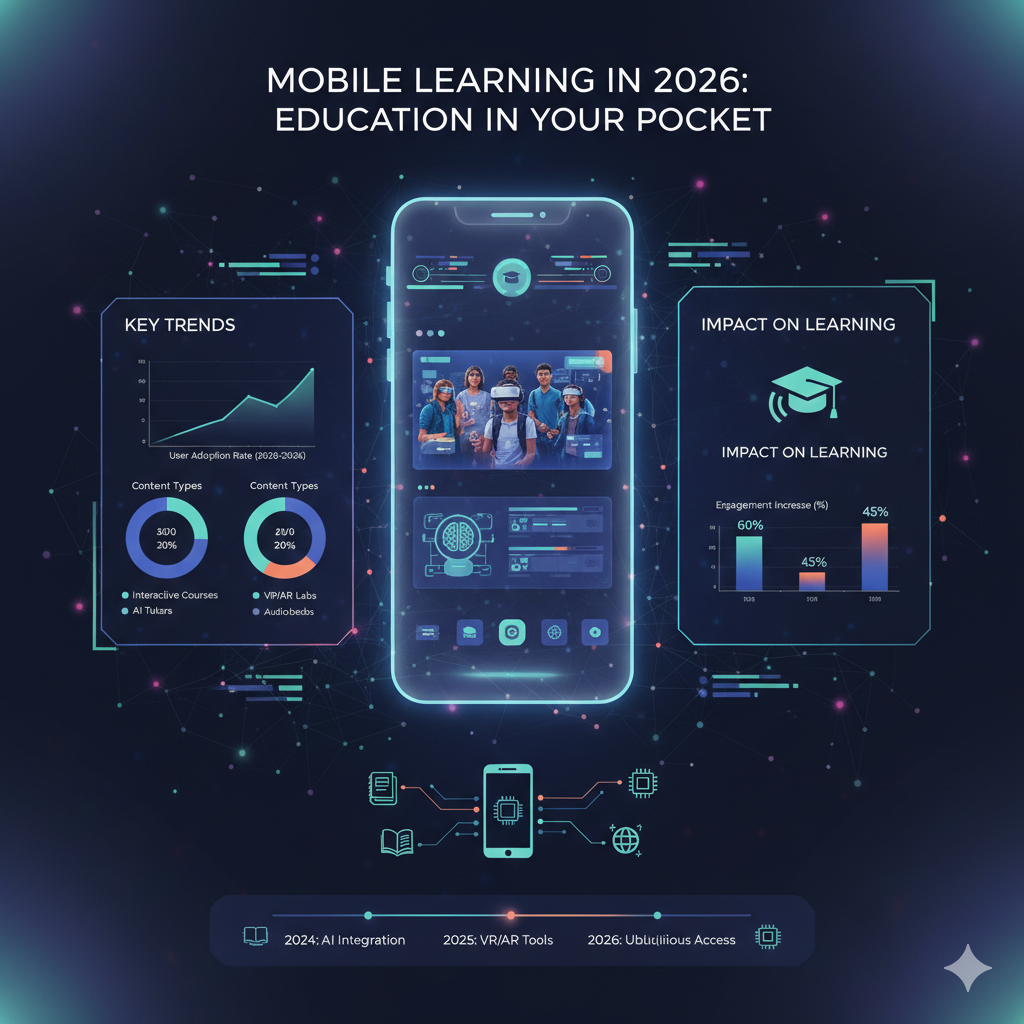
Education has definitely changed in the past few years. Your phone is no longer just for class or social media. It is actually more than that. You can also say that your mobile is now a classroom. Mobile learning is now playing a crucial role in everyday education. Many students and professionals are also relying on it.
But the question is, why? Well, the answer is pretty simple. Mobile is a lot faster and easier than traditional learning. It does not bind you to one place. You can actually learn from anywhere at any time through mobile learning. Education stays in your pocket, no matter where you are or what you are doing.
Are you still not aware of mobile learning even in 2026?
This guide will help you understand how mobile learning is shaping education in 2026. Let us begin.
How Mobile Learning Became the New Normal?
The very first thing that we will discuss is how mobile learning actually became normal.
Honestly, mobile learning did not grow overnight. It grew slowly instead. People first used phones to watch short videos. Then they downloaded learning apps. Then, full courses moved online. And phones replaced notebooks eventually.
Mobile learning has also become a daily habit for students in 2026. Students also use their mobile phones to attend lectures. They also revise their lessons using short quizzes.
They connect with teachers and other students via video calls. This offers them flexibility. And students also feel more relaxed with their education. This eventually leads to their improved grades.
Why do students prefer mobile learning?
Now you might be wondering why students actually prefer mobile learning. Don’t you?
The following are some reasons:
- Learning feels easier and faster
- Lessons fit into busy schedules
- Content is short and engaging
- Tools are interactive and fun
- Progress can be tracked easily
This also helps students stay more focused. They also feel less stress and pressure due to this. Mobile platforms now offer extra support to peers. Many students often use tools to ease their work. At the same time, others seek assignment writing help from experts. These experts assist them in submitting high-quality assignments on time. This also helps in reducing anxiety among students. It also improves learning.
Smart Technology that Makes Learning Simple
Technology in 2026 is indeed advanced. But it is still pretty easy to use. Artificial intelligence and smart apps work together. This helps you experience smooth learning. All this can happen through your mobile phone.
Key features that improve mobile learning
Here are some important tools shaping education today:
- AI-based learning apps
- Interactive video lessons
- Real-time doubt solving
- Voice search and commands
- Gamified quizzes and tests
Let me explain it to you through an example. This will make it quite easier for you. You can tell AI about your weak areas in a subject. Now it will suggest lessons and provide you with assistance with those weak areas. It will tell you to practice more if you are struggling with math. In addition, it will suggest some grammar and style tools if you find writing hard.
Students are now also receiving feedback right away. Now they don’t have to wait for weeks or even months for results. This can actually be very helpful for you. You can identify your mistake at the same point. And start working on it.
Another major benefit is personalization. Two students might not learn in the same way. Mobile apps understand this. They adjust content speed and change difficulty levels. They also recommend study plans. As a result, learning becomes more effective. It becomes more enjoyable.
Not only students but teachers can also benefit from mobile learning. They can track the progress of students. This will help them offer personalised guidance to each student. This will ultimately lead to impressive grades.
Learning Without Boundaries in Daily Life
In my opinion, one of the biggest benefits of mobile learning is flexibility. Now students don’t have to be present in the classroom.
Or they also don’t have to study at a fixed schedule. This will help you study at your own pace. This will definitely result in better academic performance. You can study while travelling or watch your lectures while having your lunch. This flexibility might help you save both your energy and time.
How does mobile learning fits daily routines?
Here are a few simple ways people learn on the go:
- Watching short tutorial videos
- Listening to educational podcasts
- Reading digital notes
- Practicing through mini quizzes
- Joining discussion groups
This daily exposure builds strong learning habits. It also improves memory. Short sessionsspread throughout the day work better than long study hours. Students from remote areas can now also access top-tier education. All they need is a phone and stable internet. This means that now education is not bound to a certain group of the community. Instead, students from any background or hometown can access this high-quality education. This reduces education gaps. It also promotes equal learning opportunities.
Adults can now learn new skills without leaving their jobs. Parents can also study while managing homes. Freelancers can also upgrade skills while working. Almost everyone can grow in 2026. You just need the right approach.
The Future of Education in Your Pocket
Mobile learning will become even more powerful in the future. New technologies will definitely enhance engagement. Virtual classrooms will feel almost real. And learning will become more immersive.
What can we expect next?
Here are some exciting changes that might be coming soon:
- Virtual reality lessons
- Augmented reality practice
- Smart voice tutors
- Emotion-based learning tools
- Fully adaptive study systems
These features will definitely make education interactive. Students will explore science labs virtually. They will walk through historical places. They can also practice languages with AI tutors. Education systems will also focus more on skills. Courses will teach
- Problem solving
- Creativity
- Emotional intelligence
Traditional memorization might slowly fade. Students will also receive better academic support. Personalized learning plans will guide them. Digital mentors will help them stay organized. And most importantly, mobile learning will continue to empower learners. It will give them control. It will build independence and encourage curiosity. As a result, education will no longer feel forced. It will feel natural and exciting. And it will always be within reach.
Wrap up
All in all! Mobile learning has indeed changed the way we think about education. Now learning has become pretty flexible for students. It has also become accessible to a vast audience. This means students from remote areas can also access top-tier education. This is all because of mobile learning. This guide will help you better understand mobile learning. And how it is changing education in 2026. Now education is truly in your pocket.
Education has definitely changed in the past few years. Your phone is no longer just for class or social media. It is actually more than that. You can also say that your mobile is now a classroom. Mobile learning is now playing a crucial role in everyday education. Many students and professionals are also relying on it.
But the question is, why? Well, the answer is pretty simple. Mobile is a lot faster and easier than traditional learning. It does not bind you to one place. You can actually learn from anywhere at any time through mobile learning. Education stays in your pocket, no matter where you are or what you are doing.
Are you still not aware of mobile learning even in 2026?
This guide will help you understand how mobile learning is shaping education in 2026. Let us begin.
How Mobile Learning Became the New Normal?
The very first thing that we will discuss is how mobile learning actually became normal.
Honestly, mobile learning did not grow overnight. It grew slowly instead. People first used phones to watch short videos. Then they downloaded learning apps. Then, full courses moved online. And phones replaced notebooks eventually.
Mobile learning has also become a daily habit for students in 2026. Students also use their mobile phones to attend lectures. They also revise their lessons using short quizzes.
They connect with teachers and other students via video calls. This offers them flexibility. And students also feel more relaxed with their education. This eventually leads to their improved grades.
Why do students prefer mobile learning?
Now you might be wondering why students actually prefer mobile learning. Don’t you?
The following are some reasons:
- Learning feels easier and faster
- Lessons fit into busy schedules
- Content is short and engaging
- Tools are interactive and fun
- Progress can be tracked easily
This also helps students stay more focused. They also feel less stress and pressure due to this. Mobile platforms now offer extra support to peers. Many students often use tools to ease their work. At the same time, others seek assignment writing help from experts. These experts assist them in submitting high-quality assignments on time. This also helps in reducing anxiety among students. It also improves learning.
Smart Technology that Makes Learning Simple
Technology in 2026 is indeed advanced. But it is still pretty easy to use. Artificial intelligence and smart apps work together. This helps you experience smooth learning. All this can happen through your mobile phone.
Key features that improve mobile learning
Here are some important tools shaping education today:
- AI-based learning apps
- Interactive video lessons
- Real-time doubt solving
- Voice search and commands
- Gamified quizzes and tests
Let me explain it to you through an example. This will make it quite easier for you. You can tell AI about your weak areas in a subject. Now it will suggest lessons and provide you with assistance with those weak areas. It will tell you to practice more if you are struggling with math. In addition, it will suggest some grammar and style tools if you find writing hard.
Students are now also receiving feedback right away. Now they don’t have to wait for weeks or even months for results. This can actually be very helpful for you. You can identify your mistake at the same point. And start working on it.
Another major benefit is personalization. Two students might not learn in the same way. Mobile apps understand this. They adjust content speed and change difficulty levels. They also recommend study plans. As a result, learning becomes more effective. It becomes more enjoyable.
Not only students but teachers can also benefit from mobile learning. They can track the progress of students. This will help them offer personalised guidance to each student. This will ultimately lead to impressive grades.
Learning Without Boundaries in Daily Life
In my opinion, one of the biggest benefits of mobile learning is flexibility. Now students don’t have to be present in the classroom.
Or they also don’t have to study at a fixed schedule. This will help you study at your own pace. This will definitely result in better academic performance. You can study while travelling or watch your lectures while having your lunch. This flexibility might help you save both your energy and time.
How does mobile learning fits daily routines?
Here are a few simple ways people learn on the go:
- Watching short tutorial videos
- Listening to educational podcasts
- Reading digital notes
- Practicing through mini quizzes
- Joining discussion groups
This daily exposure builds strong learning habits. It also improves memory. Short sessionsspread throughout the day work better than long study hours. Students from remote areas can now also access top-tier education. All they need is a phone and stable internet. This means that now education is not bound to a certain group of the community. Instead, students from any background or hometown can access this high-quality education. This reduces education gaps. It also promotes equal learning opportunities.
Adults can now learn new skills without leaving their jobs. Parents can also study while managing homes. Freelancers can also upgrade skills while working. Almost everyone can grow in 2026. You just need the right approach.
The Future of Education in Your Pocket
Mobile learning will become even more powerful in the future. New technologies will definitely enhance engagement. Virtual classrooms will feel almost real. And learning will become more immersive.
What can we expect next?
Here are some exciting changes that might be coming soon:
- Virtual reality lessons
- Augmented reality practice
- Smart voice tutors
- Emotion-based learning tools
- Fully adaptive study systems
These features will definitely make education interactive. Students will explore science labs virtually. They will walk through historical places. They can also practice languages with AI tutors. Education systems will also focus more on skills. Courses will teach
- Problem solving
- Creativity
- Emotional intelligence
Traditional memorization might slowly fade. Students will also receive better academic support. Personalized learning plans will guide them. Digital mentors will help them stay organized. And most importantly, mobile learning will continue to empower learners. It will give them control. It will build independence and encourage curiosity. As a result, education will no longer feel forced. It will feel natural and exciting. And it will always be within reach.
Wrap up
All in all! Mobile learning has indeed changed the way we think about education. Now learning has become pretty flexible for students. It has also become accessible to a vast audience. This means students from remote areas can also access top-tier education. This is all because of mobile learning. This guide will help you better understand mobile learning. And how it is changing education in 2026. Now education is truly in your pocket.
You must be logged in to post a comment.

- Most Recent
- Most Relevant


