


 Notification



 Wizard


This blog explains how modern training has moved from static slides to interactive learning experiences. It highlights how Adobe Captivate helps create engaging, responsive, and scenario-based training using interactive features and ready-to-use assets. By using these capabilities, organizations can build more effective and learner-friendly training programs.
Modern learning has changed dramatically in the last few years. Earlier, most training programs followed a simple format, slides filled with text, one after another. Learners had to read through long modules with limited interaction. While this method delivered information, it often failed to keep learners engaged.
Today, learners expect more. They want interactive, visually appealing, and personalized learning experiences. This shift has led organizations and educators to adopt modern eLearning tools that support engaging and learner-centric content. One such powerful tool is Adobe Captivate, which helps create immersive and interactive training experiences with ease.
The Shift from Static to Interactive Learning
In the past, training modules were mostly linear and static. Learners had to move from slide to slide in a fixed order. There was little opportunity to explore, interact, or apply knowledge during the course.
Modern training is different. Today’s learners prefer experiences where they can interact with the content, explore topics at their own pace, and practice real-world situations.
Modern eLearning focuses on:
- Interactive learning activities
- Scenario-based experiences
- Visual storytelling
- Mobile-friendly learning
- Short and engaging learning modules
These elements help learners stay focused and improve knowledge retention.
Interactive learning allows learners to participate actively rather than just reading information. When learners click, explore, or make decisions within a course, they understand and remember concepts better.
Meeting the Expectations of Modern Learners
Today’s learners are used to digital platforms like apps, videos, and interactive websites. Because of this, they expect training content to feel just as engaging.
Modern learners want training that is:
- Visual and interactive
- Accessible on multiple devices
- Short and easy to navigate
- Relevant to real-world situations
Traditional slides alone cannot meet these expectations. Training designers need tools that allow them to create engaging experiences without complex development processes. This is where Adobe Captivate plays an important role.
How Adobe Captivate Supports Modern Training
Adobe Captivate is a powerful eLearning authoring tool designed to create modern and interactive training content. It combines ease of use with advanced capabilities, helping instructional designers build professional learning experiences quickly.
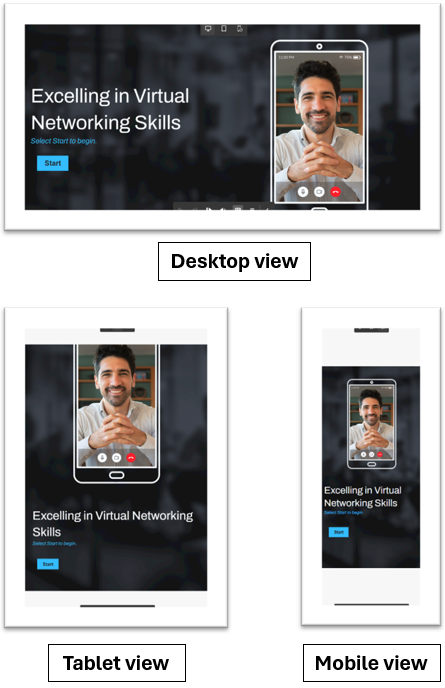
One of the key advantages of Adobe Captivate is its responsive design capability. Courses automatically adjust to different screen sizes, allowing learners to access training smoothly on desktops, tablets, and mobile devices.
This ensures learners can complete training anytime and anywhere.
Creating Interactive Learning Experiences
Adobe Captivate provides several interactive features that make learning engaging and effective.
Designers can include:
- Clickable buttons and navigation controls
- Interactive widgets
- Scenario-based slides
- Drag-and-drop activities
- Knowledge checks and quizzes
These elements allow learners to actively participate in the course rather than passively consuming information. For example, interactive buttons guide learners through the course and trigger actions such as opening content, navigating slides, or revealing additional information.
Captivate also supports a variety of interactive widgets like Cards, Tabs, Carousel, Timeline widget, Hotspots, Click to reveal, Certificate, Drag and drop and Accordion that help present information in an engaging format.
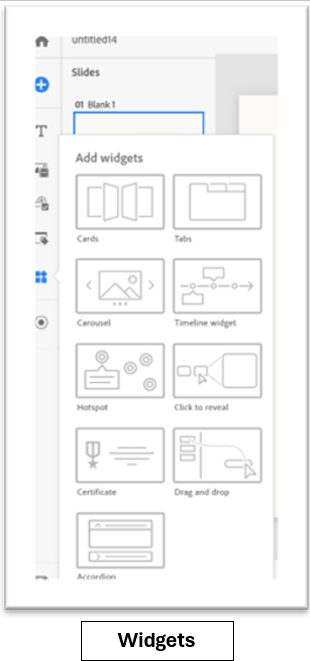
For example, Cards can reveal additional information when clicked, allowing learners to explore concepts step by step instead of reading large blocks of text.

Supporting Scenario-Based Learning
Scenario-based learning is one of the most effective methods in modern training. It places learners in real-life situations where they must make decisions and see the results of their choices.
Adobe Captivate supports scenario-based learning through interactive slides, character-based conversations, and branching paths. This allows learners to practice skills in a safe environment before applying them in real life.
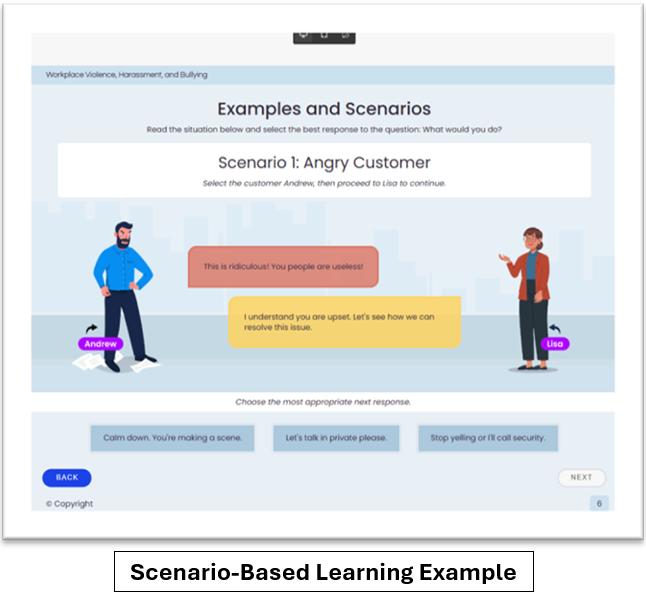
For example, in a workplace training module, learners may encounter a scenario where an angry customer named Andrew complains aggressively. The learner must choose the most appropriate response to handle the situation. By selecting different responses, they can see how the conversation progresses and learn the best way to de-escalate the situation professionally.
Faster Course Creation with Ready-to-Use Assets
Creating engaging training content does not have to be time-consuming. Adobe Captivate includes ready-to-use slides, design layouts, and assets that help course creators build professional content quickly.
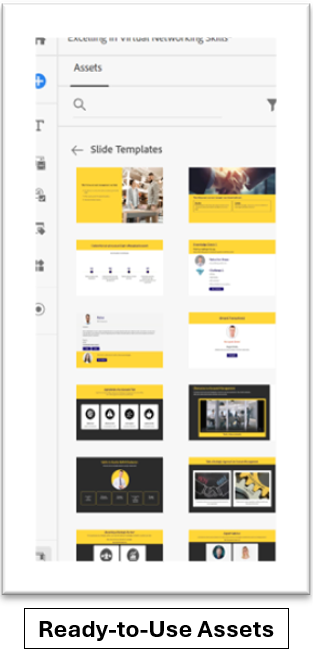
With these built-in design options, even beginners can create visually appealing courses without advanced design skills.
The Future of Training is Interactive
Modern training is no longer about simply delivering information. It is about creating engaging learning experiences that help learners apply knowledge effectively.
By combining interactive features, responsive design, and scenario-based learning, Adobe Captivate enables organizations to build training that truly connects with learners.
As the demand for flexible and engaging learning continues to grow, tools like Adobe Captivate are helping educators and organizations unlock the full potential of modern training.
Modern learning has changed dramatically in the last few years. Earlier, most training programs followed a simple format, slides filled with text, one after another. Learners had to read through long modules with limited interaction. While this method delivered information, it often failed to keep learners engaged.
Today, learners expect more. They want interactive, visually appealing, and personalized learning experiences. This shift has led organizations and educators to adopt modern eLearning tools that support engaging and learner-centric content. One such powerful tool is Adobe Captivate, which helps create immersive and interactive training experiences with ease.
The Shift from Static to Interactive Learning
In the past, training modules were mostly linear and static. Learners had to move from slide to slide in a fixed order. There was little opportunity to explore, interact, or apply knowledge during the course.
Modern training is different. Today’s learners prefer experiences where they can interact with the content, explore topics at their own pace, and practice real-world situations.
Modern eLearning focuses on:
- Interactive learning activities
- Scenario-based experiences
- Visual storytelling
- Mobile-friendly learning
- Short and engaging learning modules
These elements help learners stay focused and improve knowledge retention.
Interactive learning allows learners to participate actively rather than just reading information. When learners click, explore, or make decisions within a course, they understand and remember concepts better.
Meeting the Expectations of Modern Learners
Today’s learners are used to digital platforms like apps, videos, and interactive websites. Because of this, they expect training content to feel just as engaging.
Modern learners want training that is:
- Visual and interactive
- Accessible on multiple devices
- Short and easy to navigate
- Relevant to real-world situations
Traditional slides alone cannot meet these expectations. Training designers need tools that allow them to create engaging experiences without complex development processes. This is where Adobe Captivate plays an important role.
How Adobe Captivate Supports Modern Training
Adobe Captivate is a powerful eLearning authoring tool designed to create modern and interactive training content. It combines ease of use with advanced capabilities, helping instructional designers build professional learning experiences quickly.
One of the key advantages of Adobe Captivate is its responsive design capability. Courses automatically adjust to different screen sizes, allowing learners to access training smoothly on desktops, tablets, and mobile devices.
This ensures learners can complete training anytime and anywhere.
Creating Interactive Learning Experiences
Adobe Captivate provides several interactive features that make learning engaging and effective.
Designers can include:
- Clickable buttons and navigation controls
- Interactive widgets
- Scenario-based slides
- Drag-and-drop activities
- Knowledge checks and quizzes
These elements allow learners to actively participate in the course rather than passively consuming information. For example, interactive buttons guide learners through the course and trigger actions such as opening content, navigating slides, or revealing additional information.
Captivate also supports a variety of interactive widgets like Cards, Tabs, Carousel, Timeline widget, Hotspots, Click to reveal, Certificate, Drag and drop and Accordion that help present information in an engaging format.
For example, Cards can reveal additional information when clicked, allowing learners to explore concepts step by step instead of reading large blocks of text.
Supporting Scenario-Based Learning
Scenario-based learning is one of the most effective methods in modern training. It places learners in real-life situations where they must make decisions and see the results of their choices.
Adobe Captivate supports scenario-based learning through interactive slides, character-based conversations, and branching paths. This allows learners to practice skills in a safe environment before applying them in real life.
For example, in a workplace training module, learners may encounter a scenario where an angry customer named Andrew complains aggressively. The learner must choose the most appropriate response to handle the situation. By selecting different responses, they can see how the conversation progresses and learn the best way to de-escalate the situation professionally.
Faster Course Creation with Ready-to-Use Assets
Creating engaging training content does not have to be time-consuming. Adobe Captivate includes ready-to-use slides, design layouts, and assets that help course creators build professional content quickly.
With these built-in design options, even beginners can create visually appealing courses without advanced design skills.
The Future of Training is Interactive
Modern training is no longer about simply delivering information. It is about creating engaging learning experiences that help learners apply knowledge effectively.
By combining interactive features, responsive design, and scenario-based learning, Adobe Captivate enables organizations to build training that truly connects with learners.
As the demand for flexible and engaging learning continues to grow, tools like Adobe Captivate are helping educators and organizations unlock the full potential of modern training.
You must be logged in to post a comment.

- Most Recent
- Most Relevant


