


 Notification


 Staff
44 posts
Staff
44 posts


Years ago, I wondered why people stayed after the steel mills went quiet. Now, as AI changes our own work, that question feels rather close to home. Educators have an opportunity to become better guides, helping people build judgment, try unfamiliar things, and find a purposeful way forward.

Why this decade needs educators to become guides
By Allen Partridge · October 15, 2026
Years ago, when I was teaching at IUP, my colleague Jeff Ritchey told me something that lodged itself in my brain and apparently decided to live there rent-free.
Jeff studied adult education in rural Pennsylvania: how communities learn their way through change, and why sometimes they don’t. He told me about Johnstown, where steel had shaped the work, the neighborhoods, and the future people imagined for their children. When the mills went quiet, many people stayed. Some waited for decades, hoping the work would return.
Being curious by nature, and generously equipped with the confidence that comes from knowing very little about someone else’s life, I had a question: Why wouldn’t they move on? The jobs were gone. Surely you’d go find something else.
There. Economic displacement sorted. What’s for lunch?
The question has stayed with me because I’ve gradually come to understand how much I left out. And lately, as AI changes the work of education, I’ve begun to recognize something uncomfortably familiar in it. We have a mill of our own. We also have a chance to help build what comes next.
What moving on asks of people
I was looking at a missing job. There was a whole life wrapped around it.
Family, neighbors, pride, the place where people knew you. A sense of being useful. An understanding of what you could offer your children. “Move on” is a remarkably tidy phrase for a decision that might require you to renegotiate all of that at once.
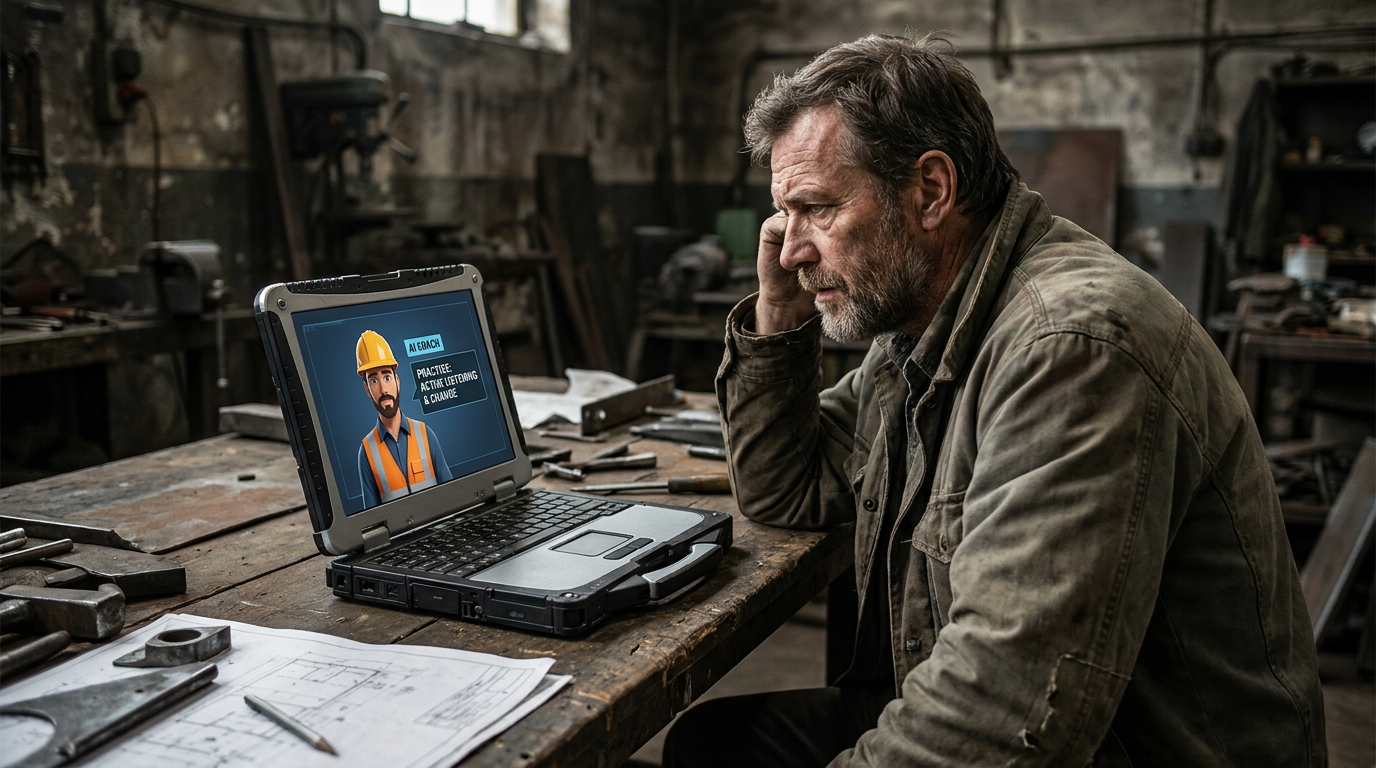
It gets especially slippery when the person recommending it cannot explain where you should go, how you’ll get there, or what you’re supposed to live on during the journey.
That realization has changed the question for me. I’m interested in what makes it possible for people to begin again: the support, the opportunities, and the room to discover that they can become capable of something they haven’t done before.
Educators have a considerable part to play in that work. We may find ourselves needing some of the same support.
Educators have a mill of our own
We know things. We explain things. We organize knowledge into something people can use. We build the course, deliver the presentation, and produce the answer. Some of us have become extremely accomplished at putting that answer on forty-seven slides.
I include myself in this distinguished tradition.
Now a machine can produce an explanation, a lesson plan, a quiz, and a suspiciously enthusiastic summary before we’ve finished naming the PowerPoint. We should examine the quality of those outputs, including the errors and the assumptions they conceal. But I think some of our discomfort goes deeper than quality control.
We’ve spent years becoming useful in a particular way. We’ve earned expertise, developed a voice, and learned how to help people understand difficult things. Seeing parts of that work become easy to generate can raise an awkward question: Where does my contribution go from here?
That question deserves a thoughtful answer. “Embrace change” is a bit thin. Handing someone a login and calling it transformation doesn’t add much substance.
A more promising place to begin is with what we could help people do now.
More room to practice judgment
Suppose learners could rehearse a difficult customer conversation several ways, then compare what happened. Suppose they could explore competing explanations, question the assumptions in a proposed solution, or test an idea before committing to it.
AI can help us create material for those experiences. An educator can help make the experience worth having.
For example, give a team an AI-generated recommendation for handling a customer complaint. Ask them to decide whether they would use it, change it, or reject it, and explain their reasoning. Then introduce a detail the original recommendation missed: the customer has already been promised a refund, or the proposed solution creates a problem for another team.
What changes? What should have been asked earlier? How confidently should anyone have acted on the information they had?
There’s a useful learning experience in those questions. There’s also quite a lot for an educator to do: choose the problem, bring relevant expertise, challenge a weak explanation, and help people examine the consequences of a decision.
I find that prospect energizing. We can put more of our effort into helping people notice, question, connect, and decide. We can make room for curiosity and for the occasional discovery that our very confident shortcut leads directly into a swamp.
Guidance is useful work. Occasionally muddy.
Give people a manageable place to begin
If someone says, “I’m worried AI is going to make my work irrelevant,” we could resist the urge to immediately enroll them in something.
Stay with the question long enough to understand it. Which part of their work concerns them? What do they enjoy? What do other people rely on them for? What would they like to become capable of?
The answers give us somewhere to begin. Someone who spends hours drafting routine communications might try a different drafting process and examine what still needs their judgment. Someone whose strength is explaining complicated ideas might test whether an AI-generated explanation actually helps a novice, then improve it.
Choose a small experiment with a clear purpose. Agree on what would make it useful. Give the person time to try it, and arrange to talk afterward.
That last part matters. We’re very good at launching people into learning experiences. We should also be there when they come back with questions, surprises, and an example of the tool confidently inventing a policy that nobody has ever heard of.
The follow-up gives us something concrete to discuss. What helped? What failed? What did their existing experience allow them to notice? What would they try next?
It also gives educators a way to practice. We can run these experiments ourselves, share what we learn, and let people see us revise a judgment without treating it as a professional emergency.
Three postcards and a first step
Here’s an exercise I’d put on the table with a team, a class, or anyone trying to imagine their next chapter.

Write three postcards.
The first is from today. What do you do well? What are you proud of? What would you like to change? What are you worried about losing?
The second is from 2028. You’re learning your way into something new. What are you practicing? Where are you getting stuck? Who’s helping?
The third is from 2030. What have you become capable of? What still matters to you? What does a satisfying contribution look like?
You’re allowed to be hopeful. Nobody is grading your accuracy as a time traveler.
Put the postcards beside each other and look for something you could begin practicing this week. Find one person who could help, and put a conversation on the calendar to compare notes after you’ve tried.
The dates give your imagination somewhere to work. The next step gives you something to do with it. You don’t need to settle your entire future before Tuesday.
Make room for people to move
People also need time, resources, and organizations willing to invest in them. A cheerful workshop cannot carry the entire economy on its little flip chart.
Leaders have decisions to make about access, workload, support, and who benefits when work becomes more efficient. People need a chance to learn during the working day and somewhere to bring difficulties without feeling that they’ve just volunteered to become redundant.
Educators can help make those needs visible. We can design opportunities to practice, bring people together to compare experiences, and help organizations learn from what happens. We can also ask whether the future being offered is one people have a good reason to want.
That’s a substantial job. Frankly, it’s an interesting one.
I keep coming back to Jeff’s story and my own easy question: Why wouldn’t they move on?
These days, I’m more interested in asking what we could help people move toward. What’s worth building? What capabilities would give them more choice? What could we begin together?
There’s a purposeful future for educators in those questions. We have experience to bring, things to learn, and useful work we can start doing now.
We have places to go. And nobody has to cross alone.
Why this decade needs educators to become guides
By Allen Partridge · October 15, 2026
Years ago, when I was teaching at IUP, my colleague Jeff Ritchey told me something that lodged itself in my brain and apparently decided to live there rent-free.
Jeff studied adult education in rural Pennsylvania: how communities learn their way through change, and why sometimes they don’t. He told me about Johnstown, where steel had shaped the work, the neighborhoods, and the future people imagined for their children. When the mills went quiet, many people stayed. Some waited for decades, hoping the work would return.
Being curious by nature, and generously equipped with the confidence that comes from knowing very little about someone else’s life, I had a question: Why wouldn’t they move on? The jobs were gone. Surely you’d go find something else.
There. Economic displacement sorted. What’s for lunch?
The question has stayed with me because I’ve gradually come to understand how much I left out. And lately, as AI changes the work of education, I’ve begun to recognize something uncomfortably familiar in it. We have a mill of our own. We also have a chance to help build what comes next.
What moving on asks of people
I was looking at a missing job. There was a whole life wrapped around it.
Family, neighbors, pride, the place where people knew you. A sense of being useful. An understanding of what you could offer your children. “Move on” is a remarkably tidy phrase for a decision that might require you to renegotiate all of that at once.
It gets especially slippery when the person recommending it cannot explain where you should go, how you’ll get there, or what you’re supposed to live on during the journey.
That realization has changed the question for me. I’m interested in what makes it possible for people to begin again: the support, the opportunities, and the room to discover that they can become capable of something they haven’t done before.
Educators have a considerable part to play in that work. We may find ourselves needing some of the same support.
Educators have a mill of our own
We know things. We explain things. We organize knowledge into something people can use. We build the course, deliver the presentation, and produce the answer. Some of us have become extremely accomplished at putting that answer on forty-seven slides.
I include myself in this distinguished tradition.
Now a machine can produce an explanation, a lesson plan, a quiz, and a suspiciously enthusiastic summary before we’ve finished naming the PowerPoint. We should examine the quality of those outputs, including the errors and the assumptions they conceal. But I think some of our discomfort goes deeper than quality control.
We’ve spent years becoming useful in a particular way. We’ve earned expertise, developed a voice, and learned how to help people understand difficult things. Seeing parts of that work become easy to generate can raise an awkward question: Where does my contribution go from here?
That question deserves a thoughtful answer. “Embrace change” is a bit thin. Handing someone a login and calling it transformation doesn’t add much substance.
A more promising place to begin is with what we could help people do now.
More room to practice judgment
Suppose learners could rehearse a difficult customer conversation several ways, then compare what happened. Suppose they could explore competing explanations, question the assumptions in a proposed solution, or test an idea before committing to it.
AI can help us create material for those experiences. An educator can help make the experience worth having.
For example, give a team an AI-generated recommendation for handling a customer complaint. Ask them to decide whether they would use it, change it, or reject it, and explain their reasoning. Then introduce a detail the original recommendation missed: the customer has already been promised a refund, or the proposed solution creates a problem for another team.
What changes? What should have been asked earlier? How confidently should anyone have acted on the information they had?
There’s a useful learning experience in those questions. There’s also quite a lot for an educator to do: choose the problem, bring relevant expertise, challenge a weak explanation, and help people examine the consequences of a decision.
I find that prospect energizing. We can put more of our effort into helping people notice, question, connect, and decide. We can make room for curiosity and for the occasional discovery that our very confident shortcut leads directly into a swamp.
Guidance is useful work. Occasionally muddy.
Give people a manageable place to begin
If someone says, “I’m worried AI is going to make my work irrelevant,” we could resist the urge to immediately enroll them in something.
Stay with the question long enough to understand it. Which part of their work concerns them? What do they enjoy? What do other people rely on them for? What would they like to become capable of?
The answers give us somewhere to begin. Someone who spends hours drafting routine communications might try a different drafting process and examine what still needs their judgment. Someone whose strength is explaining complicated ideas might test whether an AI-generated explanation actually helps a novice, then improve it.
Choose a small experiment with a clear purpose. Agree on what would make it useful. Give the person time to try it, and arrange to talk afterward.
That last part matters. We’re very good at launching people into learning experiences. We should also be there when they come back with questions, surprises, and an example of the tool confidently inventing a policy that nobody has ever heard of.
The follow-up gives us something concrete to discuss. What helped? What failed? What did their existing experience allow them to notice? What would they try next?
It also gives educators a way to practice. We can run these experiments ourselves, share what we learn, and let people see us revise a judgment without treating it as a professional emergency.
Three postcards and a first step
Here’s an exercise I’d put on the table with a team, a class, or anyone trying to imagine their next chapter.
Write three postcards.
The first is from today. What do you do well? What are you proud of? What would you like to change? What are you worried about losing?
The second is from 2028. You’re learning your way into something new. What are you practicing? Where are you getting stuck? Who’s helping?
The third is from 2030. What have you become capable of? What still matters to you? What does a satisfying contribution look like?
You’re allowed to be hopeful. Nobody is grading your accuracy as a time traveler.
Put the postcards beside each other and look for something you could begin practicing this week. Find one person who could help, and put a conversation on the calendar to compare notes after you’ve tried.
The dates give your imagination somewhere to work. The next step gives you something to do with it. You don’t need to settle your entire future before Tuesday.
Make room for people to move
People also need time, resources, and organizations willing to invest in them. A cheerful workshop cannot carry the entire economy on its little flip chart.
Leaders have decisions to make about access, workload, support, and who benefits when work becomes more efficient. People need a chance to learn during the working day and somewhere to bring difficulties without feeling that they’ve just volunteered to become redundant.
Educators can help make those needs visible. We can design opportunities to practice, bring people together to compare experiences, and help organizations learn from what happens. We can also ask whether the future being offered is one people have a good reason to want.
That’s a substantial job. Frankly, it’s an interesting one.
I keep coming back to Jeff’s story and my own easy question: Why wouldn’t they move on?
These days, I’m more interested in asking what we could help people move toward. What’s worth building? What capabilities would give them more choice? What could we begin together?
There’s a purposeful future for educators in those questions. We have experience to bring, things to learn, and useful work we can start doing now.
We have places to go. And nobody has to cross alone.
You must be logged in to post a comment.

- Most Recent
- Most Relevant


